For many managed service providers (MSPs), managing infrastructure means juggling dashboards, monitoring systems, ticketing platforms, documentation tools, remote access solutions, and customer portals. While each tool serves a purpose, switching between them often slows technicians down and creates unnecessary complexity.
A few years ago, we found ourselves dealing with the same challenges.
Every day, we moved between multiple applications just to answer simple questions or complete routine tasks. Information lived in different systems, workflows felt fragmented, and customers rarely had a single place to access everything they needed.
Instead of accepting those limitations, we started building solutions to solve them.
What began as a side project eventually evolved into two separate platforms:
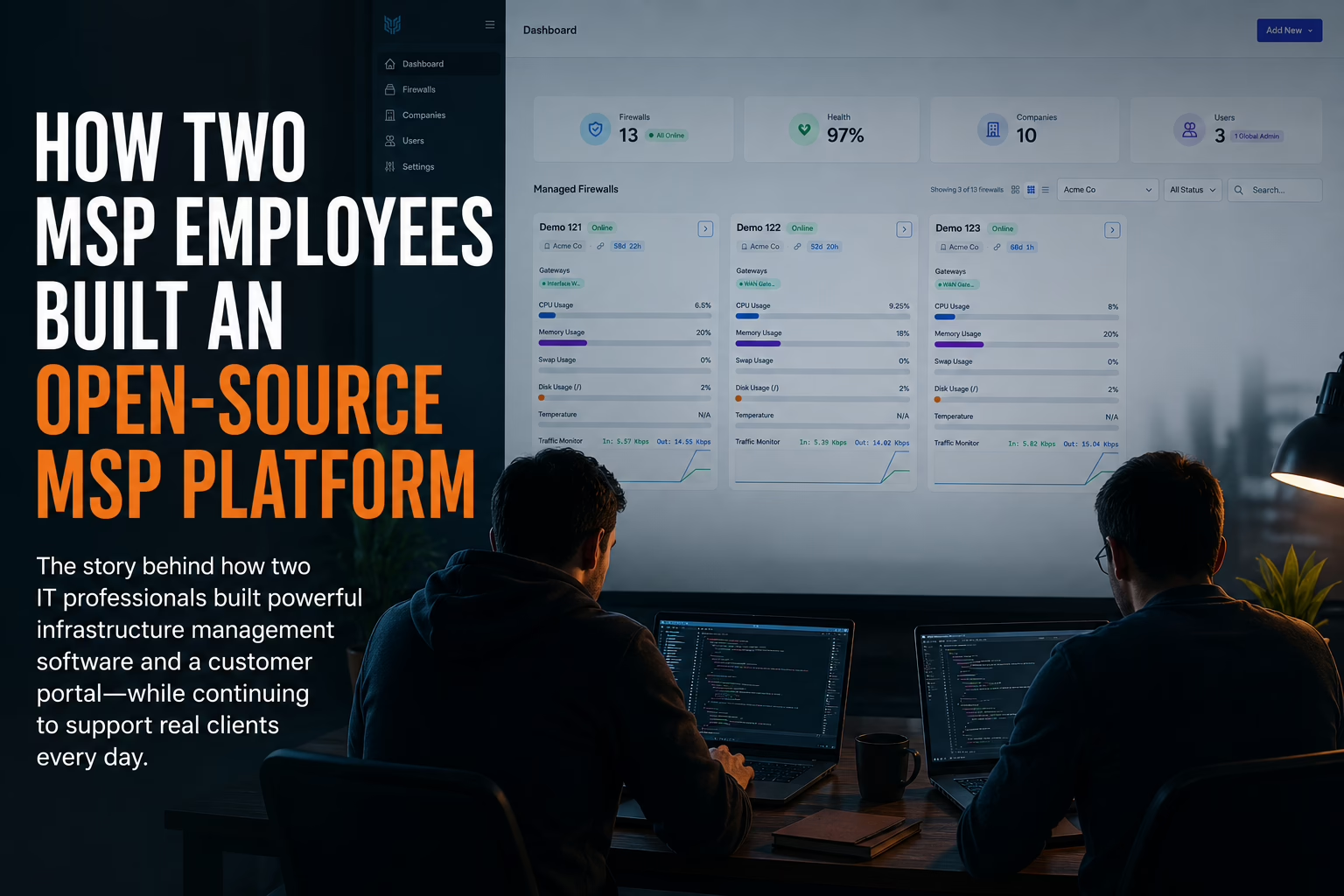
Admix Central, an open-source infrastructure management platform designed to help MSPs manage and automate critical systems.
Admix Portal, a customer-facing platform, currently in closed beta, that gives customers a centralized place to access information, services, and resources.
Neither platform came from a venture-backed startup or a dedicated software company. Rather, two employees at QWERTY Concepts built both projects while continuing to support real clients every day.
One advantage of building software inside an MSP is simple: the problems are real.
We never sat in a conference room trying to invent features that might appeal to users. Instead, we focused on challenges we encountered every day.
When technicians had to jump between systems to find information, we looked for a better way.
When customer data existed across multiple platforms, we searched for opportunities to consolidate it.
Likewise, when clients struggled to locate invoices, agreements, support information, or documentation, we explored ways to simplify the experience.
As a result, our development process remained practical from the beginning. Rather than asking what features we could build, we asked what would make our jobs easier tomorrow.
That mindset continues to guide both platforms today.
Admix Central became our first major initiative.
Rather than replacing every tool in the MSP stack, we focused on creating a platform that could centralize information and simplify infrastructure management. At the same time, we wanted MSPs to maintain the flexibility to use the products and services they already trusted.
Because every MSP operates differently, interoperability became a core design principle. We knew that forcing providers to abandon existing investments would create friction instead of value.
Consequently, we built Admix Central to work alongside established MSP workflows whenever possible.
As development progressed, new requirements emerged from real-world usage. Technicians provided feedback, operational challenges revealed new opportunities, and customer environments continuously exposed areas for improvement.
Over time, those small enhancements accumulated into something much larger than we originally imagined.
Today, Admix Central represents years of hands-on MSP experience translated into software.
Many people ask why we decided to release Admix Central as open source.
The answer is straightforward.
Throughout our careers, we benefited from countless open-source projects, community-developed tools, public documentation, scripts, and shared knowledge. Because of that, giving something back felt like the right thing to do.
Open source also promotes transparency.
Instead of asking organizations to trust marketing claims, we allow them to review the code, understand how the platform works, and customize it to meet their needs.
Furthermore, community involvement often leads to better software. Users can identify improvements, contribute ideas, and help shape the future of the platform.
In an industry built on collaboration, that approach felt natural.
While Admix Central focused on internal operations, another challenge continued to surface.
Customers wanted better visibility into their technology environments.
More importantly, they wanted convenient access to support information, assets, invoices, agreements, and recommendations without searching through emails or contacting support.
Those conversations eventually led to the creation of Admix Portal.
From the beginning, we envisioned a single destination where customers could interact with their MSP and access important information in one place.
As a result, Admix Portal focuses heavily on user experience, accessibility, and convenience.
The platform includes capabilities such as:
For MSPs, that creates a more professional customer experience. Meanwhile, customers benefit from greater transparency and easier access to the information they need.
Although Admix Central is publicly available, Admix Portal remains in closed beta.
We made that decision intentionally.
Customer-facing software introduces unique challenges that require careful attention. User expectations are higher, security requirements become more demanding, and scalability concerns grow quickly.
Therefore, we chose to prioritize quality over speed.
Rather than rushing toward a public launch, we continue refining the platform through testing, feedback, and real-world deployments. Every improvement helps us build a stronger foundation for future growth.
Our goal has never been to launch as quickly as possible.
Instead, we want to launch responsibly.
One aspect of these projects surprises people the most.
Neither of us works as a full-time software developer.
We built both platforms while maintaining our responsibilities at QWERTY Concepts. Client projects, support requests, infrastructure work, and daily operations remained our primary focus.
Because of that, development often happened during evenings, weekends, and any available downtime.
Progress rarely came from massive breakthroughs. More often, it arrived through small wins.
A bug fix here.
A new integration there.
A workflow improvement discovered during a client project.
Eventually, those small wins added up.
What started as internal tools gradually evolved into platforms capable of helping a broader audience.
Building software reinforced many of the same lessons we learned while running an MSP.
Technology alone rarely solves problems.
First, you must understand the challenge.
Second, you need to listen carefully to the people experiencing it.
Many of our most successful features originated from technician feedback, customer conversations, and operational frustrations rather than formal planning sessions.
Patience also proved invaluable.
Meaningful software development takes time. Every feature requires testing, refinement, feedback, and continuous improvement.
There are no shortcuts.
However, steady progress eventually produces meaningful results.
Both Admix Central and Admix Portal continue to evolve.
New integrations remain under consideration. Additional functionality is already in development. Meanwhile, feedback from users and community members continues to influence future priorities.
Despite that growth, our mission remains unchanged.
We want to build practical solutions that solve real-world problems.
What began as two MSP employees trying to improve their own workflows has grown into something much larger.
Looking back, we're proud of what we've accomplished so far.
Not because we set out to create software.
Because we set out to solve problems.
The software simply became the result.